

New Message: "The Lump is Your Friend"
- Mar 20
- 4 min read
Updated: Apr 8
In your body's survival manual, a single typo can gaslight your immune system into protecting a harmful intruder, and the only way to survive is to rewrite the code.
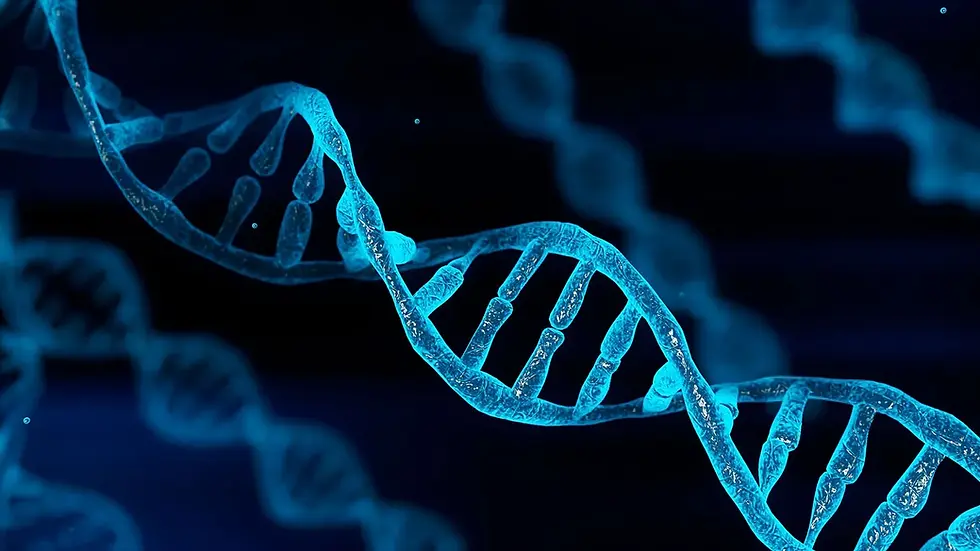
Image Credit - Britannica
Let’s imagine you receive texts from your 3-billion DNA chain that say, “Keep heart beating!” and “Digest food!” These messages are important reminders to tell your body to continue what it is doing. But what if your immune system gets a message like, “Stop growing,” or “Don’t fret, the lump is your friend”? In Breast Cancer, this message comes across as a huge typo compared to the messages your body received before.
This is the starting point where scientists figure out what is wrong with your genetic code, or in this case, the typos in the texts that your body received. Scientists observe your human genome and pinpoint the exact set of letters that are incorrectly written to harm you.
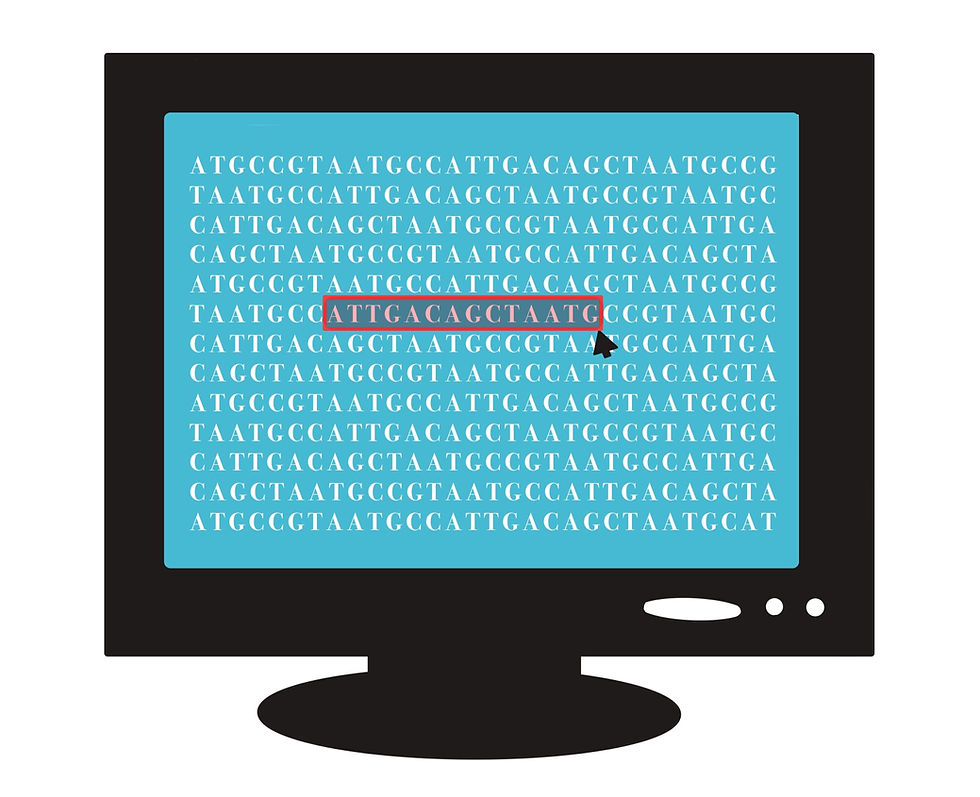
But what letters? Before we dive in, let’s go over a couple of things:
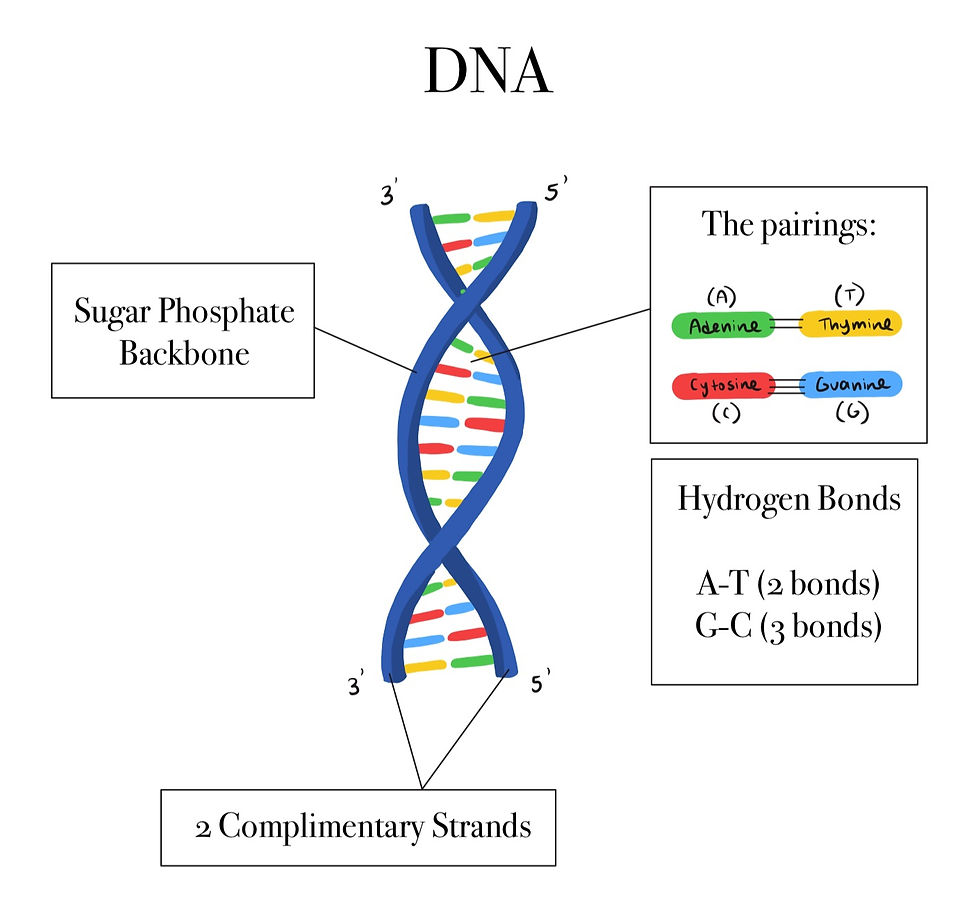
DNA, also known as Deoxyribonucleic acid, is a two-stranded helix that contains the instructions for living organisms that are needed to develop, reproduce, and function normally. It consists of 4 nitrogenous bases, which are Thymine (T), Cytosine (C), Guanine (G), and Adenine (A). These are special because they each can be paired with one another with hydrogen bonds. A is paired with T, with 2 hydrogen bonds; G is paired with C, with 3 hydrogen bonds. The more bonds you have, the more stable the connection is. With these four bases, the DNA creates a beautiful double helix that is held together with 2 complimentary strands and hydrogen bonds.
RNA (no, this is not a typo), Ribonucleic acid, is single-stranded, unlike DNA. By being in living cells and viruses, it acts like an assistant to DNA by carrying out its instructions. Since it is not double-stranded, it is flexible.
There are 3 types of RNA:
 | 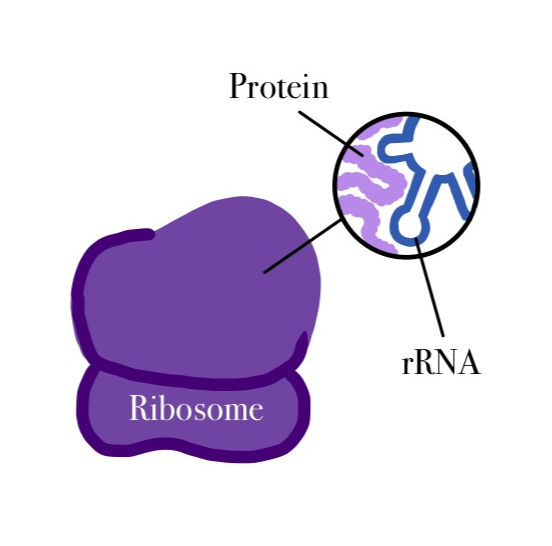 |  |
mRNA messenger RNA carries genetic information from DNA to synthesize proteins | rRNA transfer RNA interprets the information by transporting amino acids to ribosomes, where they are assembled into proteins | tRNA ribosomal RNA forms the structural component of ribosomes |
After the scientist figures out something is wrong with your genetic code, they hunt for the specific sequence of letters that has “typos” and do one of three things: remove it, insert something new, or edit it. But how exactly does this process work?
It’s done through the process of CRISPR. (No, this is not a typo either, but I honestly thought it was a fancy name for a chip when I first heard it) It stands for Clustered Regularly Interspaced Short Palindromic Repeats. CRISPR consists of a protein called Cas9 that cuts DNA, and RNA identifies the target sequence to modify.
To keep the “autocorrect” feature safe, Cas9 searches for something similar to a “verification” button, which in this context is called PAM, Protospacer Adjacent Motif. This is, in a way, a security lock where Cas9 won’t cut the DNA unless it sees this short code next to the typo itself. This feature makes sure it doesn’t accidentally delete the good messages in your body.
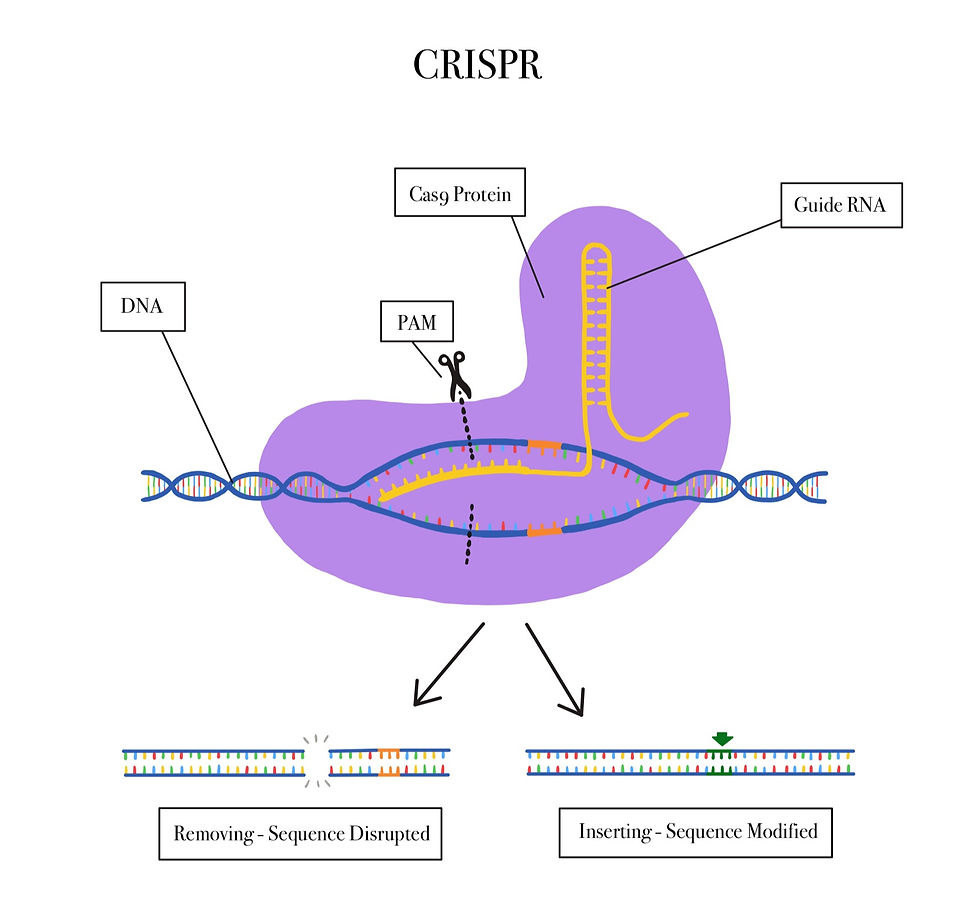
After identifying the sequence of letters that are causing a problem, scientists meticulously create an RNA strand called a guide RNA that has the complementary letters to match the sequence. For example, if the “typo” sequence has letters A G T G, the guide RNA would have T C A C to match it. The guide RNA is actually located inside the Cas9 protein, which is then set in motion with the cells that have a problem.

In the lens of Breast Cancer, scientists use a process called Ex Vivo editing. In this process, they take your immune cells, T-cells, out of your body. Think of it like taking your phone to a repair shop, but fixing the code in a lab.
After the CRISPR tool finds the typo in these cells, it can do two things:
Snip the PD-1 gene → Delete the mute button so the cancer can’t trick the immune system into thinking the lump is a “friend.”
Insert a CAR (Chimeric Antigen Receptor) → Add a face ID policy so that the immune cells can recognize the lump as an intruder.
After the text messages in your immune cells are fixed, these new and edited cells are put into your body to find and delete the cancer that’s been tricking your body. Unfortunately, the cancer spent a lot of time trying to become friends with your immune system, only to get ghosted. Next time, just tell your immune system to write, “We aren’t friends, you’re just a typo I’m deleting.” Make sure to hit “block” while you’re at it.
References
Karn, V., Sandhya, S., Hsu, W., Parashar, D., Singh, H. N., Jha, N. K., Gupta, S., Dubey, N. K., &
Kumar, S. (2022). CRISPR/Cas9 system in breast cancer therapy: Advancement, limitations
and future scope. Cancer Cell International, 22(1). https://doi.org/10.1186/s12935-022-
Mayo Clinic. (2018). CRISPR explained [YouTube video]. In YouTube.
https://www.youtube.com/watch?v=UKbrwPL3wXE
Plumer, B. (2018, July 23). CRISPR, one of the biggest science stories of the decade, explained.
Vox. https://www.vox.com/2018/7/23/17594864/crispr-cas9-gene-editing
Sen, S. (2024). Ribonucleic acid (RNA). Genome.gov. https://www.genome.gov/genetics-
glossary/Ribonucleic-Acid-RNA
Your Genome. (n.d.). What is RNA? Yourgenome.org. https://www.yourgenome.org/theme/what-




Comments